
What Is a Cable Tray? Types, Uses and Buyer’s Guide
A cable tray is a structural support system used to route, organize, and protect electrical cables and wiring in commercial and industrial buildings. It consists of open or ventilated metal sections that hold cables securely while allowing heat to dissipate and providing easy access for inspection and maintenance. This guide explains cable tray types, manufacturing, specifications, and how to choose the right system for your project.
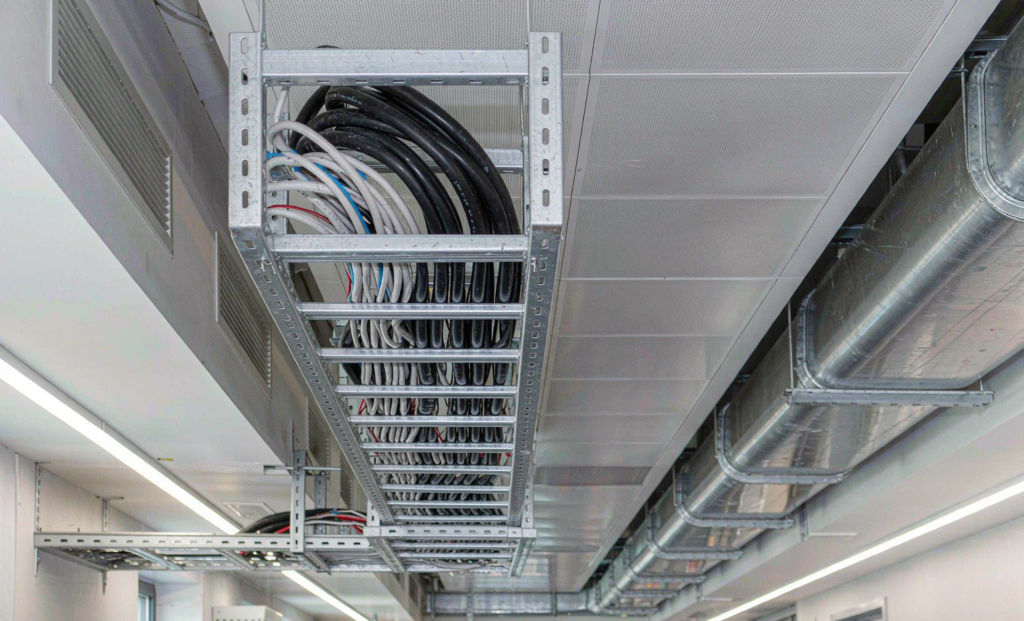
What Is a Cable Tray?
A cable tray is an assembly of rigid metal or non-metallic sections that form a continuous pathway for supporting insulated electrical cables, power wiring, and communication cables. Unlike conduit, which fully encloses cables in a tube, a cable tray leaves the cables exposed to air while providing mechanical support at regular intervals.
Cable trays are most commonly manufactured from steel, but stainless steel, aluminum, and fiberglass-reinforced plastic (FRP) versions are also available for specific environments. The steel is normally protected against corrosion by galvanizing or powder coating.
For B2B buyers, understanding cable trays matters because the choice of system directly affects installation cost, cable heat dissipation, long-term maintenance, and compliance with local electrical standards. Selecting the wrong type can lead to overheating, corrosion, or expensive rework on site.
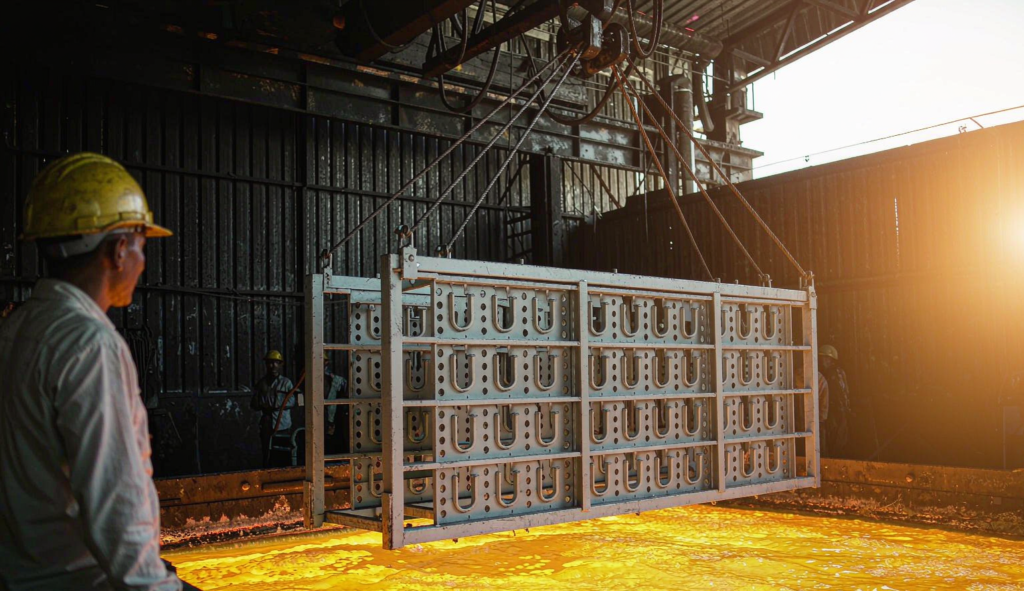
How Is a Cable Tray Manufactured?
The manufacturing process varies slightly by type, but most steel cable trays follow a common production sequence:
- Raw material selection — Cold-rolled or hot-dip galvanized steel coil is chosen according to the required strength and corrosion class.
- Cutting and punching — Sheets are cut to width and length, and perforation patterns are punched where ventilation is required.
- Forming — Side rails are roll-formed or press-braked into their final profile; rungs or bottom panels are produced separately.
- Welding or assembly — For ladder trays, rungs are welded to the side rails; other types use riveting, clinching, or mechanical fastening.
- Surface treatment — The formed tray is hot-dip galvanized, electro-galvanized, or powder coated to protect against corrosion.
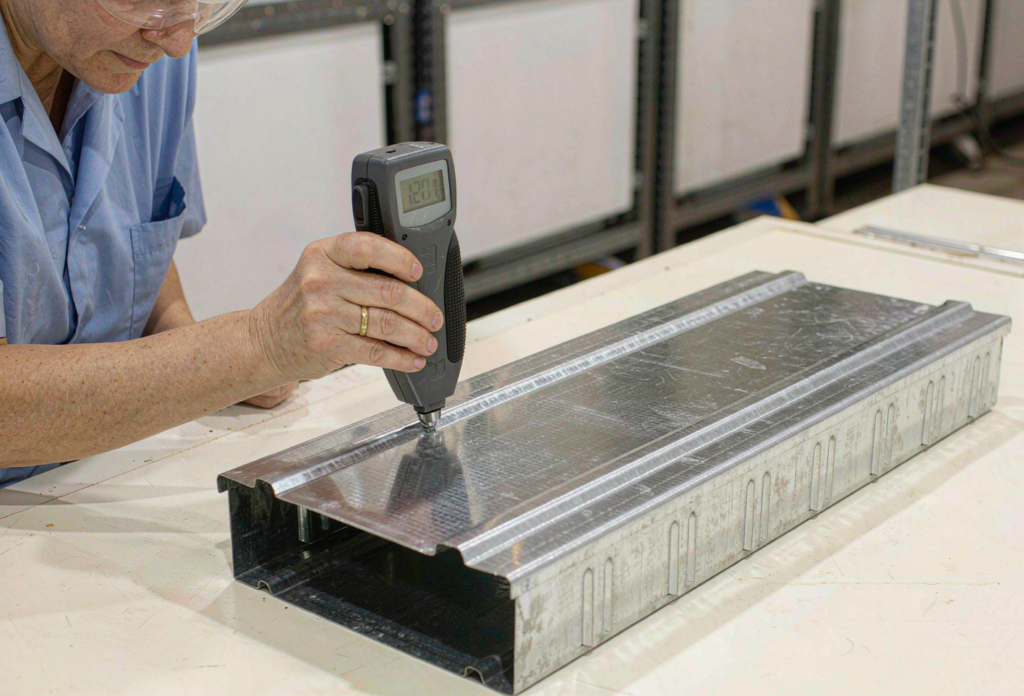
- Inspection — Dimensional checks, coating thickness measurement, and visual inspection are carried out before release.
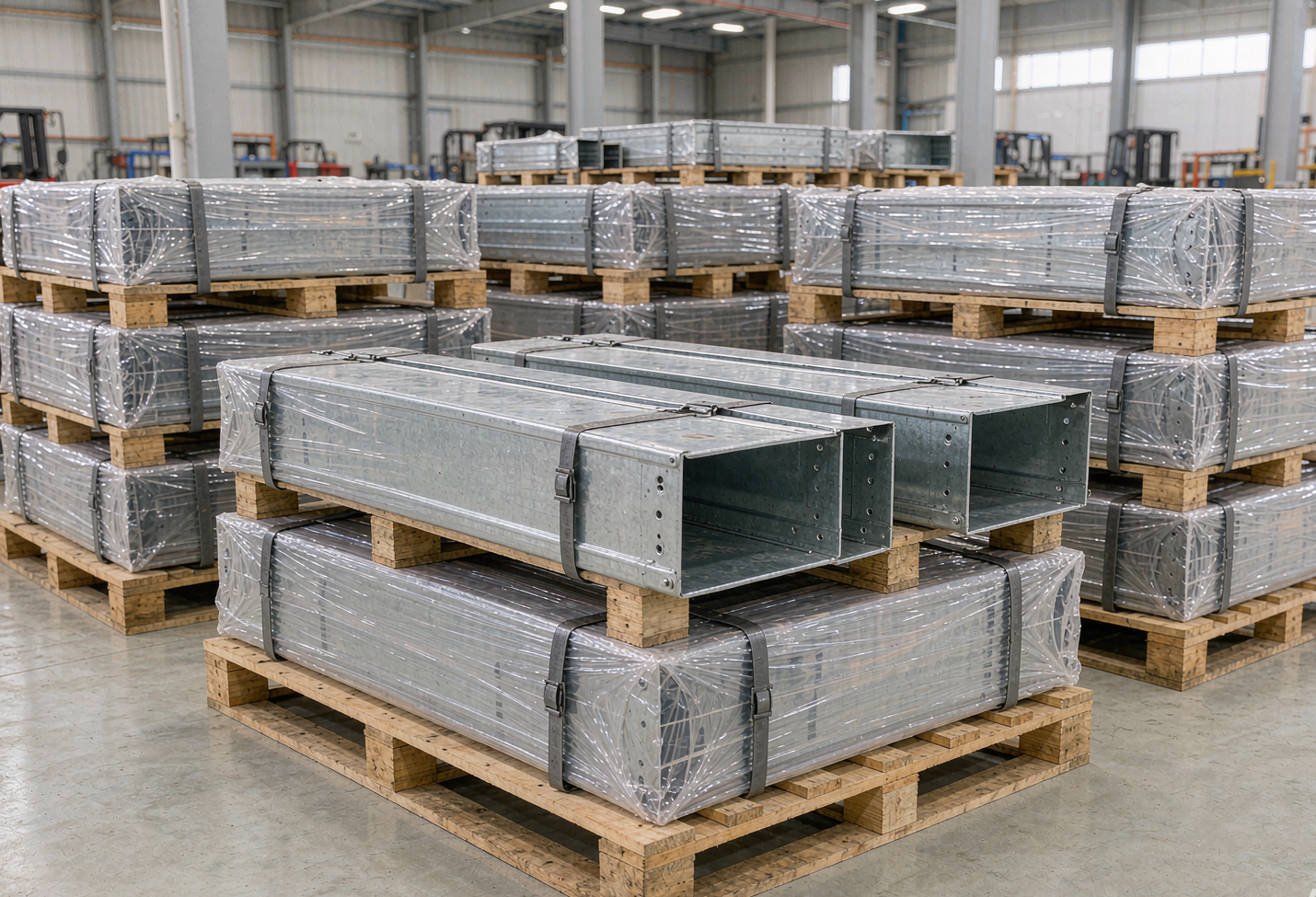
- Packaging — Sections are bundled, protected, and labeled for export or domestic delivery.
What Types of Cable Trays Are Available?
Ladder Cable Tray
A ladder cable tray has two longitudinal side rails connected by transverse rungs, resembling a ladder. The open design offers excellent ventilation and easy cable access.
Features: High strength-to-weight ratio, maximum airflow, simple cable drops. Typical specifications: widths from 150 mm to 900 mm, side rail heights from 75 mm to 150 mm. Common uses: heavy power cables in industrial plants, substations, and large commercial risers. Best for: contractors and distributors handling high-current power distribution. See the cable ladder product range.
Perforated Cable Tray
A perforated cable tray has a solid bottom with punched holes that provide moderate ventilation while supporting smaller cables and preventing them from sagging through the gaps.
Features: Good cable support, partial ventilation, clean appearance. Typical specifications: standard widths of 50 mm to 600 mm. Common uses: control wiring, instrumentation, and branch circuits in commercial buildings. Best for: projects with many small to medium cables that need continuous support. See the perforated cable tray range.
Wire Mesh Cable Tray
A wire mesh cable tray is made from welded steel wire formed into a basket-like grid. It is lightweight, flexible, and quick to install, making it popular for structured cabling and data applications.
Features: Excellent ventilation, easy field modification, reduced weight. Typical specifications: mesh sizes of 50 mm x 100 mm or 100 mm x 100 mm. Common uses: data centers, telecom rooms, and commercial cable management. Best for: low-voltage, structured cabling, and fiber installations. See the wire mesh cable tray range.
Solid Bottom Cable Tray
A solid bottom cable tray has a continuous, unperforated base. It provides maximum cable protection and is used where dust, debris, or electromagnetic shielding is a concern.
Features: Full cable support, dust protection, optional metal covers. Common uses: sensitive instrumentation, fire-rated areas, and environments with heavy contamination. Best for: applications where cables must be shielded or fully supported along their length.
Enclosed Cable Trunking
Cable trunking is a fully enclosed rectangular channel with a removable lid. It protects cables from mechanical damage and provides a neat, concealed installation.
Features: Complete enclosure, high protection, tidy finish. Common uses: indoor power and data distribution where cables must be hidden or protected. Best for: commercial fit-outs and areas where appearance or protection is critical. See the cable trunking range.
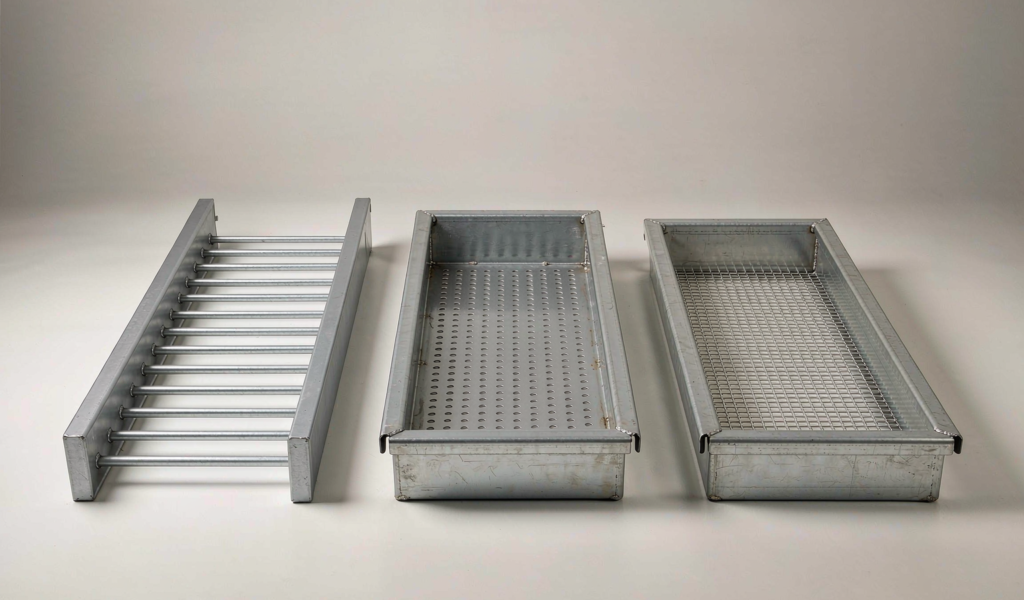
Comparison of Main Cable Tray Types
| Type | Material | Surface Treatment | Main Feature | Corrosion Resistance | Typical Application | Relative Cost |
|---|---|---|---|---|---|---|
| Ladder | Steel / SS / Alu | HDG, powder coat | High strength, open | Good (HDG) | Power cables, substations | Low–Medium |
| Perforated | Steel | HDG, powder coat | Ventilated, supportive | Good (HDG) | Control wiring, commercial | Medium |
| Wire Mesh | Steel wire | Electro-galv., HDG | Lightweight, flexible | Good | Data centers, telecom | Low |
| Solid Bottom | Steel | HDG, powder coat | Full protection | Good (HDG) | Instrumentation, fire-rated | Medium–High |
| Trunking | Steel | Powder coat, HDG | Fully enclosed | Good | Indoor distribution | Medium |
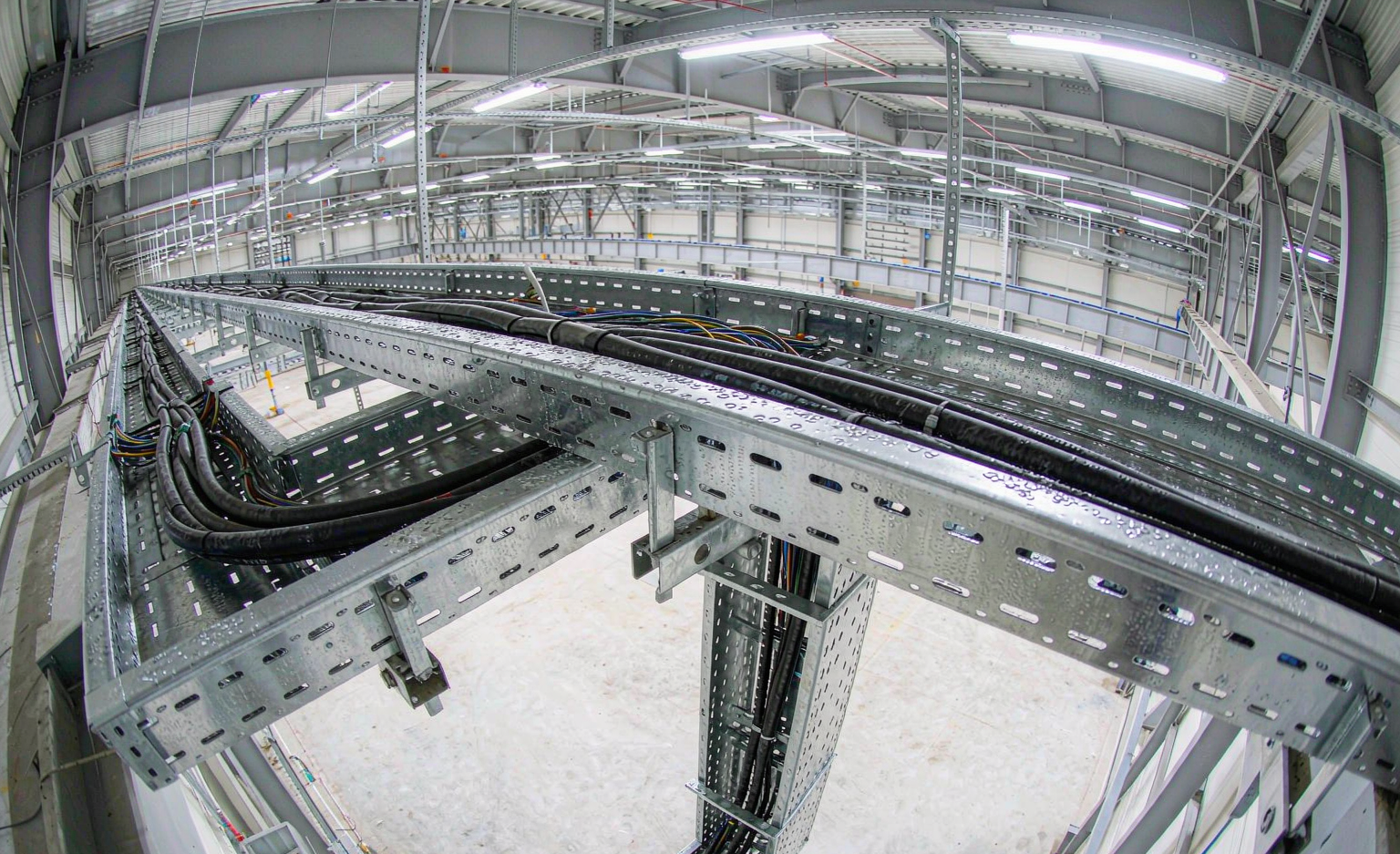
Common Applications of Cable Trays
Commercial Buildings
In offices, retail, and mixed-use buildings, perforated and wire mesh trays route power, lighting, and data cabling through ceilings and risers. Perforated tray is common for branch circuits, while wire mesh suits structured cabling above suspended ceilings.
Industrial Plants
Factories and processing plants use ladder and perforated trays to carry high-current motor feeders and control cables. Ladder tray is preferred where cable weight and heat are significant; stainless steel is specified in food or chemical plants with aggressive conditions.
Data Centers
Wire mesh tray is the standard choice in data centers because of its airflow, light weight, and fast installation. It supports large volumes of copper and fiber cable while allowing easy re-routing as servers are reconfigured.
Power and Utilities
Substations and power stations route medium and low-voltage cables on heavy-duty ladder trays. Hot-dip galvanized steel is typical for its long outdoor service life.
Tunnels and Infrastructure
Road and rail tunnels require corrosion-resistant systems, often hot-dip galvanized or stainless steel, with covers to protect cables from debris and maintenance activity.
Renewable Energy
Solar farms and wind installations use cable trays to manage DC and AC cabling across long outdoor runs. UV-resistant coatings and stainless or HDG steel extend service life in exposed conditions.
What Specifications Should Buyers Check?
When comparing quotes, verify these parameters rather than price alone:
- Material — carbon steel, stainless steel, aluminum, or FRP.
- Width and height — determined by cable volume and bending radius.
- Length — standard section length, commonly 3 m or 6 ft.
- Load class — the safe working load over a given support span.
- Surface treatment — pre-galvanized, hot-dip galvanized, or powder coated.
- Coating thickness — for HDG, typical minimums reference standards such as ASTM A123.
- Applicable standard — NEMA VE 1 in North America or IEC 61537 internationally.
- Accessories — bends, tees, reducers, couplers, and covers.
- Packaging and unit weight — for logistics and handling cost.
Requirements may vary by application, market, and applicable standard, so confirm the relevant specification with your engineer or supplier before ordering.
How to Choose the Right Cable Tray
Use the following factors to narrow down the correct system:
- Application — power, control, data, or instrumentation cables.
- Environment — indoor or outdoor, wet or dry.
- Corrosion exposure — humidity, salt, chemicals, or industrial gases.
- Base material — the structure the tray will be mounted to.
- Installation method — ceiling, wall, or underfloor mounting.
- Required service life — short-term temporary or 20+ year installation.
- Local standards — NEC/NEMA, IEC, or national codes.
- Budget — balancing material, coating, and accessory cost.
- Distribution channel — packaging and container loading for export.
Cable Tray vs Cable Ladder
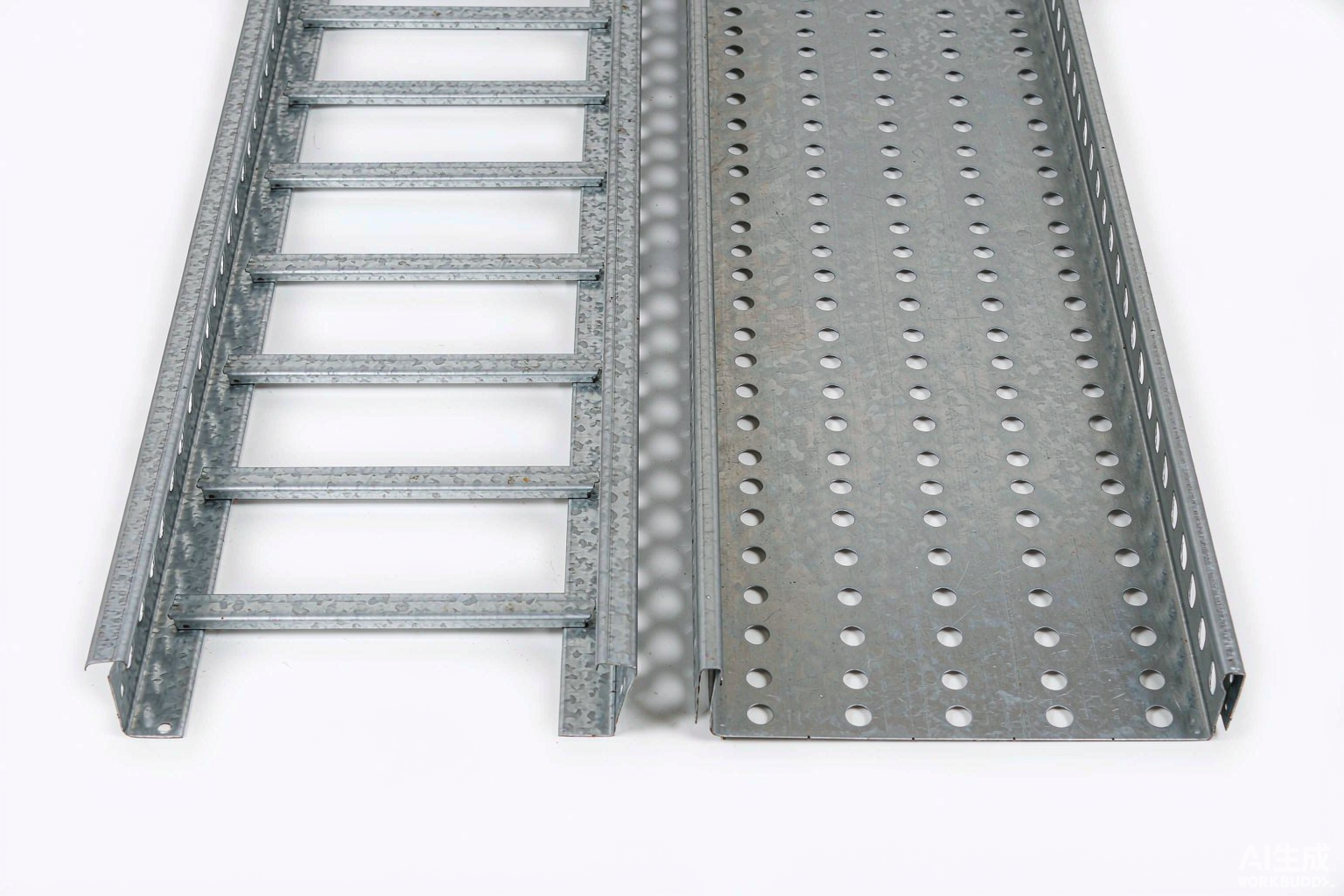
Buyers often ask whether to specify a cable tray or a cable ladder. The difference is mainly in the bottom structure and ventilation.
| Factor | Cable Tray | Cable Ladder |
|---|---|---|
| Bottom | Solid or perforated sheet | Transverse rungs |
| Ventilation | Moderate | Maximum |
| Cable support | Continuous | At rung intervals |
| Best for | Small/medium cables, control wiring | Heavy power cables |
| Weight | Higher per meter | Lower per meter |
Choose a solid or perforated tray when cables need continuous support or shielding. Choose a ladder when you are running heavy power cables that benefit from maximum airflow and easy drops.
How to Inspect Cable Tray Quality
Before shipment, arrange for these checks — many can be done during a pre-shipment inspection:
- Dimensional inspection — width, height, length, and tolerance against the drawing.
- Surface inspection — check for sharp edges, burrs, and weld defects.
- Material verification — confirm steel grade and thickness with mill certificates.
- Coating inspection — measure galvanizing or powder coat thickness and adhesion.
- Mechanical testing — load test a sample to verify the declared load class.
- Installation test — fit a sample section with couplers and accessories.
- Packaging inspection — verify bundling, labeling, and protection for transit.
What Information Should Be Included in an RFQ?
Provide the following details to receive an accurate quotation:
- Product type — ladder, perforated, wire mesh, solid, or trunking.
- Material — steel, stainless steel, aluminum, or FRP.
- Dimensions — width, height, and section length.
- Surface treatment — pre-galvanized, hot-dip galvanized, or powder coated.
- Required standard — NEMA VE 1, IEC 61537, or other.
- Packaging — export packing requirements.
- Order quantity — total meters and section quantity.
- Destination port — for freight estimation.
- Intended application — so the supplier can recommend the right type.
- Drawing, sample, or reference image — if available.
How to Choose a Reliable Cable Tray Supplier
Evaluate suppliers on measurable factors rather than marketing claims:
- Raw-material sourcing — traceable steel coil and coating supply.
- Manufacturing capability — forming, welding, and finishing equipment in-house.
- Quality-control process — documented inspection points during production.
- Specification consistency — repeatable dimensions across batches.
- Test reports — available load and coating test data.
- Sample availability — willingness to provide samples before bulk order.
- Custom packaging — export packing and container loading support.
- Export experience — familiarity with destination documentation.
- Production lead time — realistic delivery commitments.
- Complaint handling — clear process for quality issues.
Frequently Asked Questions
Will a cable tray rust?
Hot-dip galvanized steel cable trays resist corrosion well in normal and many outdoor conditions. For aggressive environments, stainless steel or FRP is recommended. Requirements vary by application and environment.
Is a cable tray suitable for outdoor use?
Yes, when a corrosion-resistant finish such as hot-dip galvanizing is specified. Confirm the coating class matches the humidity and pollution level of the site.
What is the difference between galvanized and powder-coated trays?
Galvanizing is a zinc coating bonded to the steel for corrosion protection, while powder coating is a polyester or epoxy paint finish applied over the surface. Hot-dip galvanizing generally provides longer outdoor life; powder coating is often chosen for appearance indoors.
How do I choose the right size?
Calculate the total cable cross-section and allow spare capacity, typically 30% to 50% for future growth. Then select a width and height that respect the minimum cable bending radius.
Can cable trays be customized?
Yes. Most manufacturers offer custom widths, heights, lengths, finishes, and accessories such as bends, tees, and reducers. Provide a drawing or specification for an accurate quotation.
How are cable trays packaged?
Sections are typically bundled, wrapped, and placed on pallets or in crates for export. Discuss packaging with the supplier to protect the coating and simplify handling at the destination.
What is the minimum order quantity?
MOQ depends on the type, size, and finish. Custom dimensions usually require a larger quantity than standard stock sizes. Ask the supplier for the MOQ for your specific specification.
How do I request a sample?
Contact the supplier with your required type and specification. Many manufacturers provide sample sections so you can verify quality before placing a bulk order.
Source Cable Trays from BANGE Electric
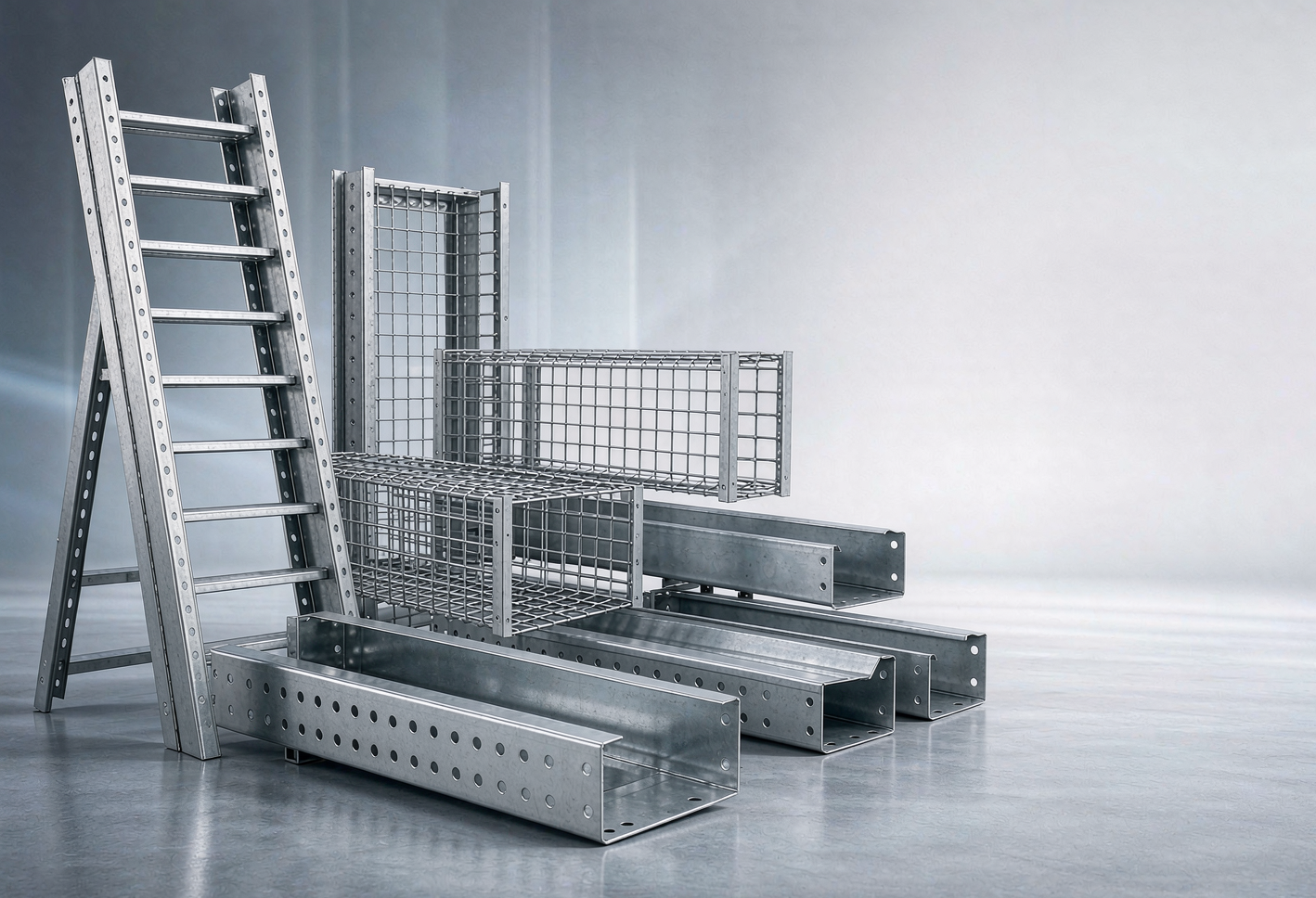
BANGE Electric provides integrated electrical distribution and cable system solutions, including cable trays, cable ladders, wire mesh trays, busway systems, and distribution boxes. We support specification customization, consistent quality control, export packaging, and reliable international supply for importers, distributors, and project contractors.
To receive a quotation, send us your product type, dimensions, material, surface treatment, packaging, order quantity, and destination port. Our team will respond with specifications and pricing.