Understanding the main devices helps procurement teams verify configurations and compare quotations fairly.
A basic understanding of distribution-cabinet components helps procurement teams determine whether a proposed configuration is complete and whether the quoted price is reasonable.
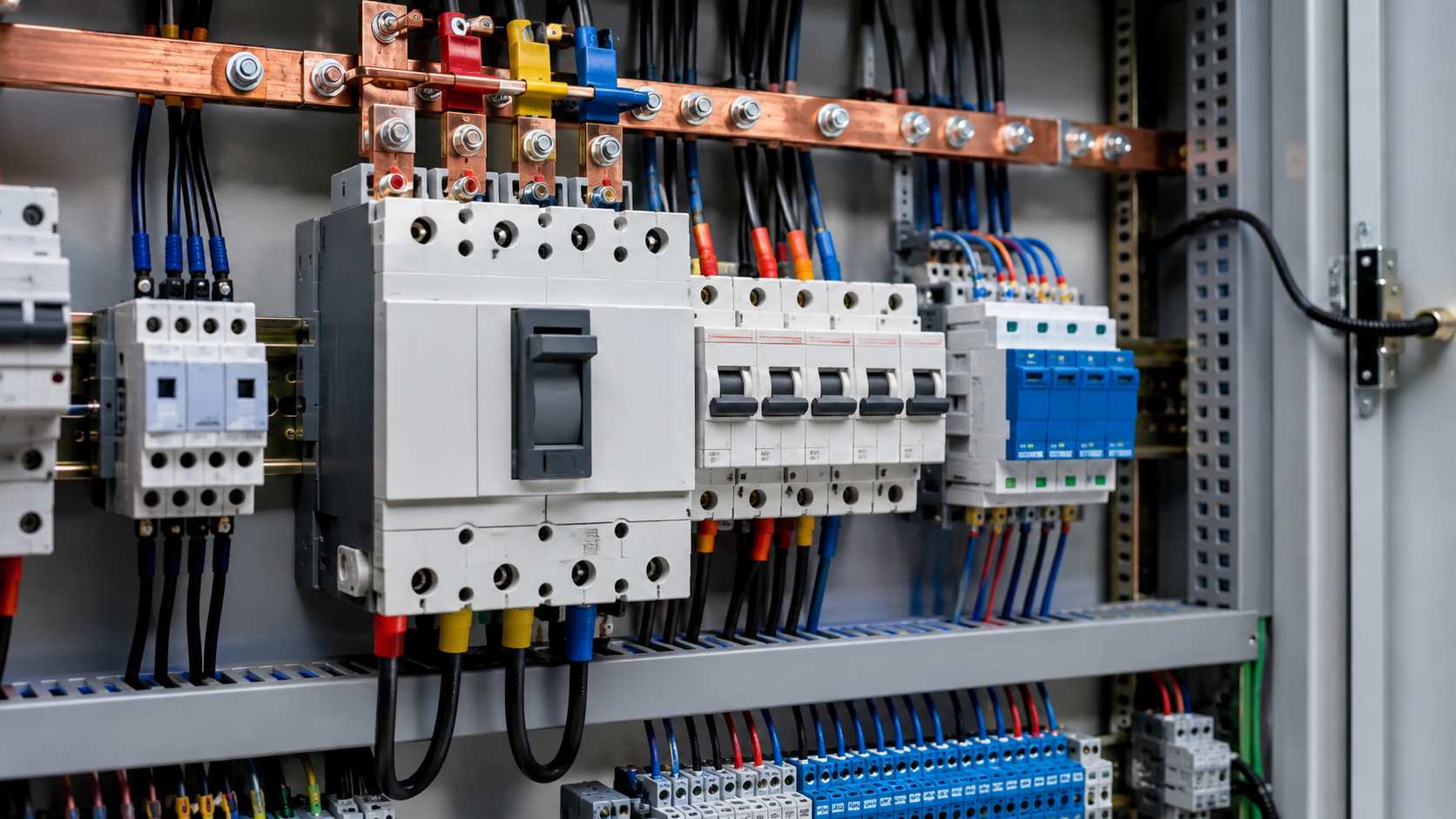
Circuit breakers are the cabinet’s primary protective devices. They connect and disconnect circuits and provide protection during overload or short-circuit conditions. Key selection points include rated current, number of poles, breaking capacity, and protection characteristics—not simply appearance or brand.
Contactors are commonly used to control motors or other loads that switch frequently. They may be combined with overload relays, push buttons, and auxiliary devices to form a control circuit. Surge protective devices limit transient overvoltages caused by lightning or switching events. Their installation position and backup protection arrangement are also important.
Copper busbars collect and distribute electrical power. Cross-sectional area, joint quality, clearance, insulation, and surface treatment directly affect temperature rise and reliability. Terminal blocks, wiring, and cable ducts may represent a small share of the total price, but they often reveal the manufacturer’s workmanship. Good internal wiring should be orderly, securely terminated, clearly identified, and accessible for inspection and maintenance.
Current transformers, meters, indicators, and control-power components should match the approved drawings. During inspection, buyers should verify each item against the bill of materials and examine busbar joints, conductor terminations, labeling, and general internal cleanliness—not just the exterior finish.