
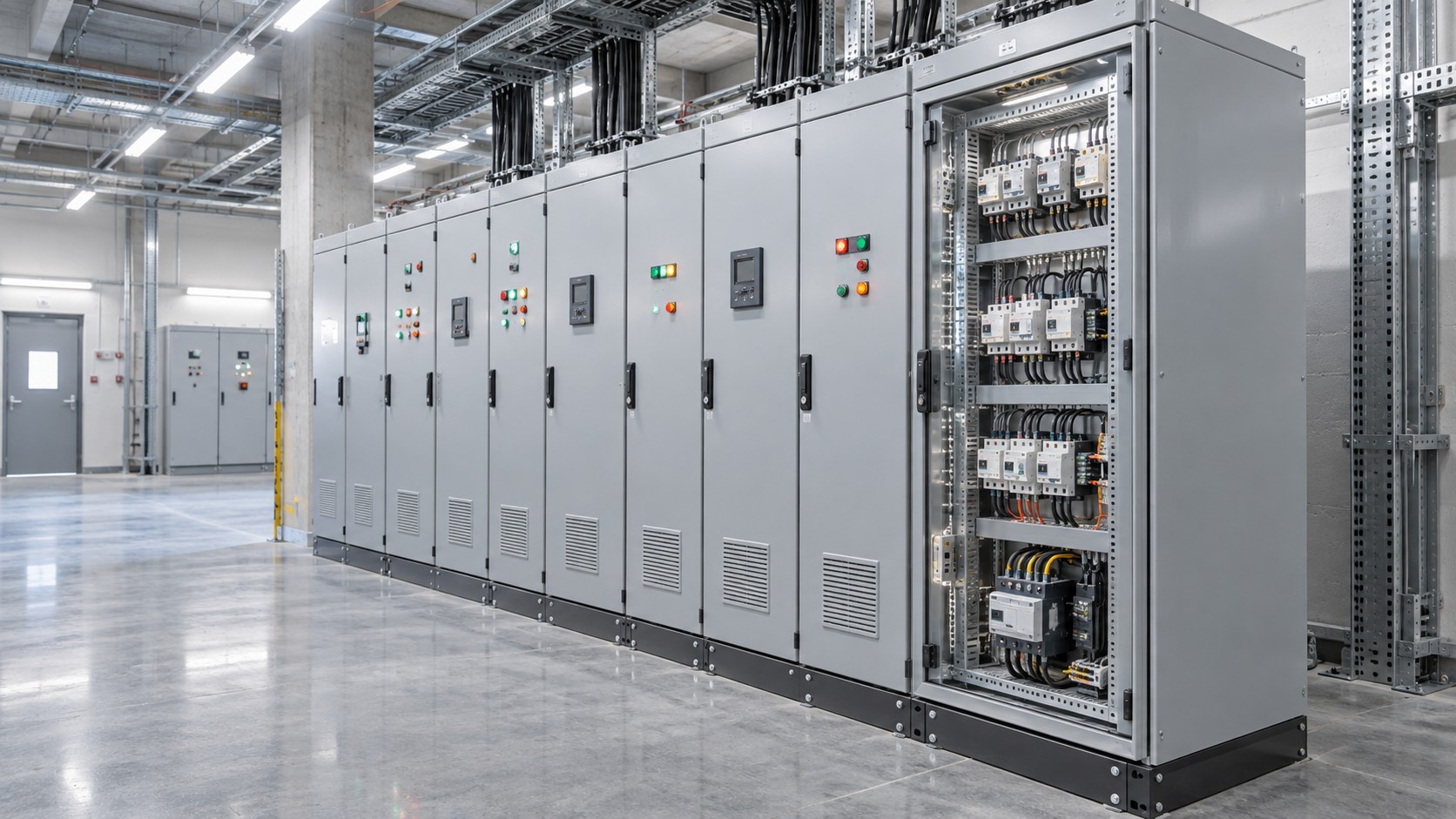
Hygienic Cable Tray for Food, Beverage and Pharmaceutical Plants: Materials, Finish and Washdown Ratings
Selecting hygienic cable tray: 304L vs 316L vs FRP, surface roughness Ra, drainable construction, and IP66/IP69 washdown ratings.
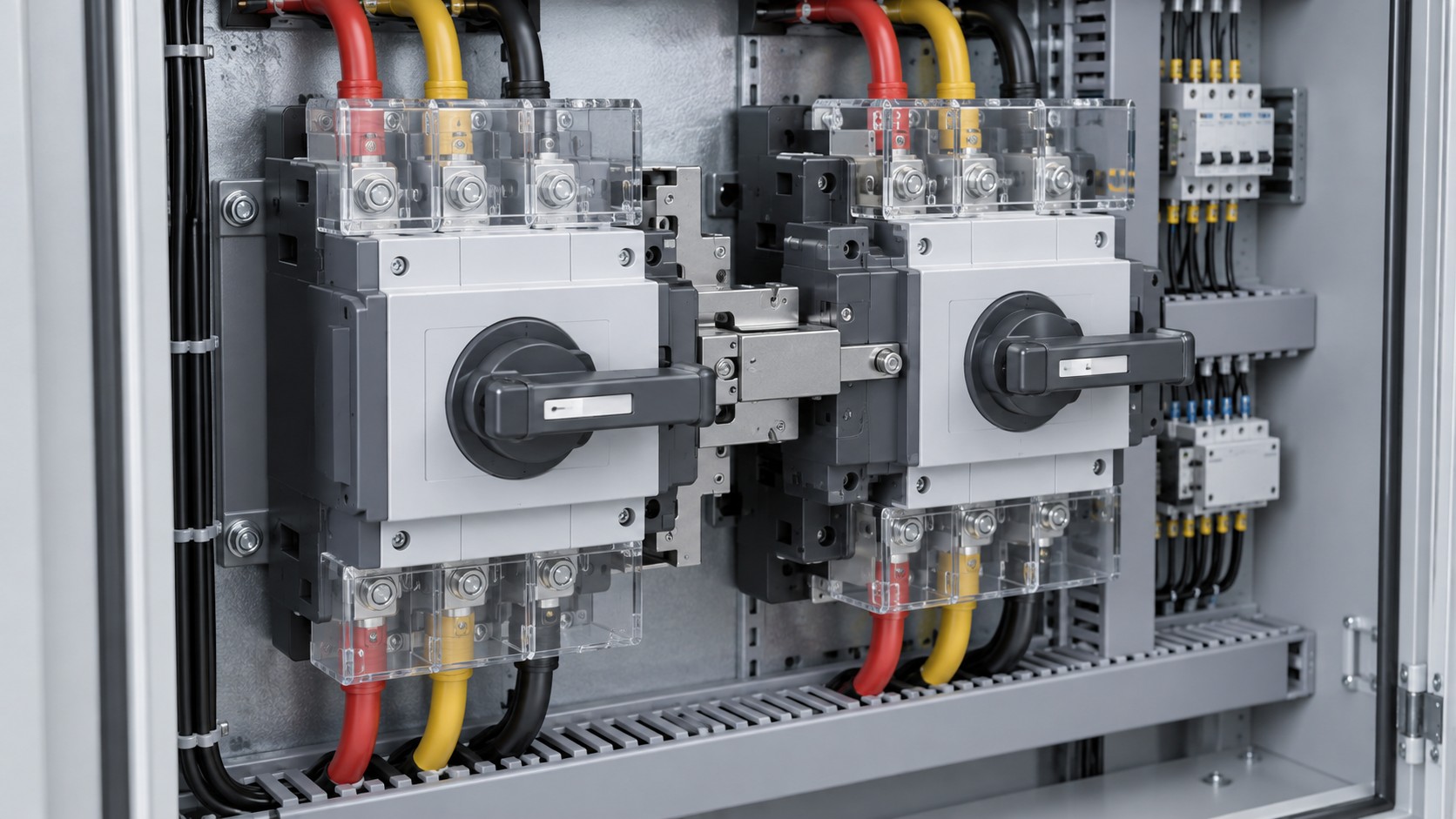
Busway Short-Circuit Withstand: Icw, Ipk and Bracing Design for Busbar Trunking Systems
How to specify and verify busway short-circuit withstand: Icw, Ipk, peak factor, bracing, support spacing and IEC 61439-6 checks.
Selectivity in Distribution Boards: How to Coordinate Breakers Correctly
Distribution board selectivity explained: total vs partial selectivity, Is limit current, time-current coordination, RCD layering and cascading trade-offs per IEC 60947-2.
Cable Tray for Solar PV Plants: Routing, UV Resistance and Grounding
Cable tray selection for solar PV plants: material by ISO 9223 corrosivity category, tray type and heat dissipation, DC routing rules, bonding and IEC 62446-1 ...
Cable Tray Expansion Joints: Thermal Movement, Calculation and Placement
How to calculate cable tray thermal movement and place expansion joints: coefficients by material, worked example, fixed points, bonding and inspection checks.
Copper vs Aluminium Busway Conductors: Conductivity, Joints and Total Cost
Compare copper and aluminium busway conductors on resistivity, weight, joint behaviour, creep and total cost, with a voltage drop worked example per IEC 61439-6.
Busway IP Ratings: What IP54, IP65 and IP68 Mean for Outdoor and Buried Runs
Busway IP ratings explained: IEC 60529 codes, IP54/IP65/IP68 selection by location, joints and tap-off weak points, plus application and acceptance guidance.
Distribution Box Short-Circuit Ratings: Icw, Ipk and Type-Tested Assemblies
Distribution box short-circuit ratings explained: Icw vs Ipk vs Icu, how to calculate prospective fault current, worked example, and when to recheck after a supply ...